
Tesla Robotaxi
Tesla, Inc.Maps & Navigation
4.8153.00 Reviews
- Version
- 26.11.0-7771
- Installs
- 100.00K
- Age Rating
- Everyone
Screenshots
Our Review of Tesla Robotaxi
 Analysis by Appyee
I approached Tesla Robotaxi as a focused Maps & Navigation app rather than as another general-purpose map. Its central idea is simple: it is built around an autonomous ride service, with Tesla, Inc. listed as the developer. That narrow purpose makes the app interesting, but it also changes how I judge it. I am not looking for the huge collection of restaurants, transit layers, saved places, and route-planning tools I expect from a traditional navigation app. I am asking a more practical question: does a dedicated way to request an autonomous ride make getting around feel easier?
My short answer is that the concept is appealing for people who want transportation without driving, while the experience is naturally more dependent on where the service is available and how comfortable the rider is with an autonomous vehicle. The app is free, has an Everyone content rating, and its current version is 26.6.6-7516. Its store summary describes an autonomous ride service, while the shorter description identifies it as Tesla Robotaxi. Those details tell me that this is primarily a service-access app, not a replacement for Google Maps, Apple Maps, or a dedicated public-transit planner.
One capability changes the whole navigation experience
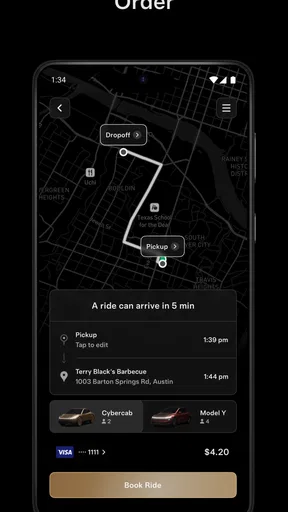
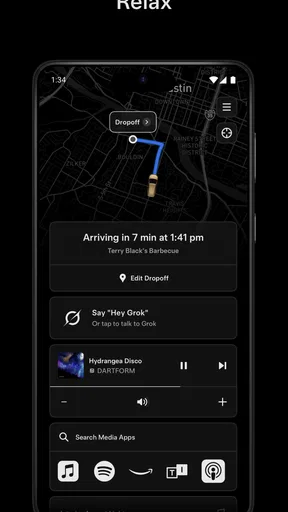
The capability that matters most here is the connection between a map interface and an autonomous ride. In a normal navigation app, I remain responsible for the trip: I choose a route, drive, walk, cycle, or coordinate with a driver. With Tesla Robotaxi, the intended experience is different. The app is meant to help me use transportation in which the vehicle handles the driving task.
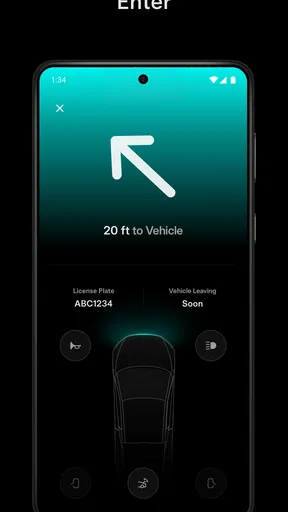
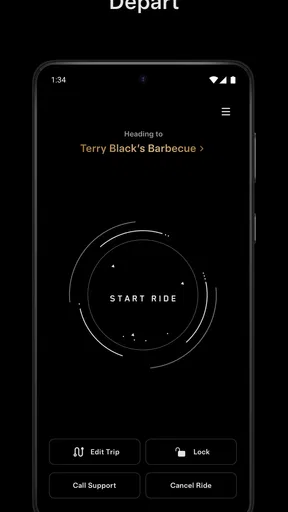
That distinction has a real effect on how I think about a journey. I am not simply asking, “Which road should I take?” I am asking, “Can this service take me there, and what do I need to do before and during the ride?” A successful app in this category should reduce the mental work around requesting a trip, identifying the correct vehicle, and understanding when the ride is ready. The value is therefore less about displaying a clever route and more about making the handoff from phone to vehicle feel clear.
I like this focused approach because it avoids pretending that every transportation problem is the same. A person heading to an appointment may not need ten map layers. They may need a dependable way to arrange a ride and know where to wait. A traveler with luggage may care more about a simple pickup experience than about comparing several roads. For those situations, a dedicated autonomous-ride app can feel more relevant than a broad map packed with unrelated options.
At the same time, I would not install it expecting a complete travel toolbox. If I need detailed walking directions, a bus timetable, cycling guidance, or a carefully planned multi-stop itinerary, a conventional navigation app is likely the better first choice. Tesla Robotaxi makes most sense when the ride itself is the main task.
What the focused design means for a rider
The most useful way to approach the app is to treat it as the front door to a transportation service. I would open it when I already know I want an autonomous ride, rather than browsing it casually for points of interest. That mindset helps set realistic expectations and prevents the common mistake of comparing it feature by feature with a general map.
In practical terms, I would check the pickup location before requesting anything. A pin near a large building, a busy curb, or a divided road may not be as straightforward as it looks on a screen. Even when the app makes the request simple, I still need to be physically ready for the vehicle’s arrival. Looking at the surrounding street, choosing a visible waiting spot, and keeping the phone available are small habits that can make the experience less stressful.
Another useful habit is to avoid treating the app as a last-second solution for every trip. Autonomous transportation can be attractive precisely because it removes driving, but a rider still needs time to understand the pickup process and react if the location is inconvenient. For an important appointment, I would leave a buffer rather than assuming the ride will behave like an instant elevator.
The app’s high average rating of 4.8 from around 233 ratings suggests that the people who have rated it generally respond well to the experience. I see that as encouraging, but not as a guarantee that it will suit every neighborhood or every type of journey. A rating reflects the experience of its existing audience; my own decision would still depend on whether the service fits my location, routine, and comfort level.
A realistic everyday trip
Imagine that I have an evening appointment across town and do not want to drive, find parking, or ask a friend for a lift. I would use Tesla Robotaxi for the ride itself, checking the pickup point before I leave my home. Once the request is arranged, my attention shifts from driving directions to being ready at the correct place. That is the strongest everyday benefit: I can use travel time without having to manage traffic personally.
For this scenario, the app is more useful than a standard map because the map is not the final product. The final product is the ride. A conventional map could tell me how to drive there or help me combine walking with public transit, but it would not provide the same autonomous-vehicle experience. On the other hand, if the appointment is near a reliable train line and I already know the timetable, public transit may be cheaper, more predictable, or more suitable than requesting a car.
I would also consider the return journey before leaving. If I am visiting a place with poor phone reception, limited lighting, or a complicated pickup area, arranging the outbound trip is only half the planning. The app may be excellent for the first leg while another option is better for getting home. That is an important trade-off: a dedicated ride service can simplify one journey without automatically solving the whole day.
Where it compares well with ordinary alternatives
Compared with driving myself, the obvious advantage is reduced responsibility behind the wheel. I do not need to concentrate on traffic, search for parking, or arrive already tired from the journey. This is especially appealing when I want to use travel time for reading, messaging, or simply relaxing, although I would still keep my attention available for pickup instructions and unexpected changes.
Compared with a human-driven ride service, the appeal is the autonomous nature of the trip. Some riders will value the privacy and the different atmosphere of traveling without a driver in the front seat. Others will prefer the reassurance of a person who can answer a question, help with a confusing destination, or respond immediately to an unusual situation. Neither preference is wrong. It depends on whether independence or human assistance matters more to me.
Compared with public transit, Tesla Robotaxi is potentially more convenient for door-to-door travel, carrying bags, or reaching places that are awkwardly connected by bus or rail. Transit still has major strengths for regular commuting, high-demand corridors, and journeys where predictable stops matter more than private space. I would not replace a good train route with an autonomous ride simply because the app is newer.
Compared with walking or cycling, the service is useful when distance, weather, time, or mobility makes active travel impractical. Walking remains the simplest option for short trips, and cycling can be faster in some urban areas. The right choice is not always the most technologically interesting one; it is the one that fits the actual journey.
Small workflow choices that make a difference
My first practical tip is to inspect the pickup area before confirming a ride. A map pin can look precise while the real curb is separated by a median, a one-way street, a parking restriction, or a building entrance that is hard to recognize. If I can identify a clear landmark and wait where a vehicle can safely approach, I reduce confusion for myself and make the meeting point easier to understand.
My second tip is to treat the phone as part of the ride, not merely as the device used to request it. I would keep enough battery, avoid putting the phone away immediately, and pay attention to the app while moving toward the pickup location. This is particularly important when I am in an unfamiliar area. The convenience of autonomous travel does not remove the need to navigate the short distance between my actual position and the vehicle.
My third tip is to use the app selectively rather than automatically. For a short trip with an easy walking route, requesting a car may add waiting and pickup steps that are less convenient than walking. For a long trip with luggage, bad weather, or limited parking, the same service may provide a much better experience. The capability is most valuable when it removes a meaningful burden, not when it merely replaces a simple journey.
A fourth consideration is routine planning. If I expect to use the service regularly, I would build a personal checklist around the places I visit most: the easiest pickup side of a building, a safe waiting point, and an alternative route home. This is not a flashy feature, but it is the kind of preparation that turns a promising service into a dependable habit. It also acknowledges that the quality of a ride depends on the physical environment, not only on the app’s interface.
Where the experience can feel limited
The biggest limitation is the narrow scope. Tesla Robotaxi is not the app I would choose as my only navigation tool. It is not presented as a broad directory, a transit planner, or a universal route organizer. If I need to compare several ways of reaching a destination, I would begin with a conventional map and then decide whether this service belongs in the plan.
There is also a human-comfort trade-off. Some riders may enjoy the independence of an autonomous vehicle, while others may feel uneasy without a driver present. That feeling cannot be solved by a cleaner interface. If I want immediate conversation, assistance with heavy luggage, or someone to make judgment calls in an unusual situation, a human-driven service may be a better fit.
Pickup friction is another realistic concern. The ride may be autonomous, but the rider still has to reach the right place at the right time. Large venues, busy streets, and unfamiliar neighborhoods can make that harder than the simple map view suggests. I would be especially cautious when traveling with children, managing mobility equipment, or handling several bags, because the easiest-looking pickup point may not be the most accessible one.
The service can also be a poor match for trips that require multiple stops or detailed coordination. A general map can help me build an itinerary around shops, stations, and appointments. A dedicated ride app is more naturally suited to one ride at a time. If my day involves several errands, I would plan the sequence elsewhere and use Tesla Robotaxi only where it clearly saves effort.
Finally, I would not confuse a strong rating with universal suitability. The app has around 10 thousand installs, which shows meaningful interest while still representing a specific audience rather than every kind of traveler. Its free price makes trying it easier, and the Everyone age rating keeps the entry barrier broad, but those points do not remove the practical questions about location, pickup comfort, and whether autonomous travel is right for me.
Who will get the most from it
I think Tesla Robotaxi is most compelling for adults who regularly need door-to-door transportation and would rather not drive. It can be a good match for someone who works irregular hours, dislikes parking, or wants a quieter ride without arranging a human driver. It may also appeal to people who are curious about autonomous mobility and are willing to learn a slightly different travel routine.
The app could be especially useful for occasional journeys that are inconvenient by car but awkward by transit. Examples include visiting a location with limited parking, carrying shopping bags over a longer distance, or traveling when weather makes walking unpleasant. In those cases, the ride service addresses a specific problem instead of becoming technology for its own sake.
I would be more cautious recommending it as the only option for people who need hands-on assistance, have strict arrival deadlines, or are uncomfortable with autonomous vehicles. I would also suggest that regular transit users compare the complete journey rather than focusing only on convenience. A train or bus may offer a better routine when the route is direct and dependable.
Families and caregivers should think through the pickup and handoff details before relying on it. The important question is not simply whether a ride can be requested, but whether the passenger can comfortably reach the vehicle, identify it, and complete the trip without the support they normally expect from a driver. That practical test matters more than the novelty of the technology.
My verdict after looking at the whole journey
The strongest reason to use Tesla Robotaxi is not that it is another map; it is that it turns the map into access to an autonomous ride. That focused capability can remove the stress of driving and parking, and it offers a different kind of independence from both personal cars and human-driven services. I appreciate the clarity of that purpose, especially for trips where door-to-door travel matters.
I would recommend it to someone who wants to try autonomous transportation, has a journey suited to a single ride, and is prepared to pay attention to pickup details. I would not recommend abandoning a trusted navigation or transit app, because those tools solve broader planning problems that this app is not designed to replace. The best setup is often complementary: use a general map to understand the day, then use Tesla Robotaxi when its autonomous ride is the part that genuinely improves the trip.
Developed by Tesla, Inc., the app has a 4.8 average from roughly 233 ratings and is available free of charge. Its current version, 26.6.6-7516, reflects an actively identifiable product rather than an abstract concept. My final view is positive but conditional: if the autonomous ride service fits my location and I value not driving, this is a focused and potentially useful tool. If I mainly need route discovery, transit planning, walking directions, or personal assistance during a ride, I would choose a more traditional alternative instead.
For the right rider, Tesla Robotaxi is best understood as a practical doorway to a new way of getting around. I would judge it by the complete experience—from selecting a sensible pickup point to reaching the destination comfortably—not by the novelty of the vehicle alone. That is where its real value becomes clear, and also where its limitations deserve an honest look.
Privacy and Permissions
See what permissions an app requests and how it handles your data.
- Calendar
- read calendar events plus confidential information, add or modify calendar events and send email to guests without owners' knowledge
- Contacts
- read your contacts
- Location
- approximate location (network-based), precise location (GPS and network-based)
- Phone
- directly call phone numbers
- Photos/Media/Files
- read the contents of your USB storage, modify or delete the contents of your USB storage
- Storage
- read the contents of your USB storage, modify or delete the contents of your USB storage
- Camera
- take pictures and videos
- Microphone
- record audio
- Wi-Fi connection information
- view Wi-Fi connections
- Other
- view network connections, pair with Bluetooth devices, access Bluetooth settings, change network connectivity, allow Wi-Fi Multicast reception, connect and disconnect from Wi-Fi, full network access, control Near Field Communication, run at startup, control vibration, prevent device from sleeping, modify system settings, Google Play license check
Verdict
Strengths of Tesla Robotaxi
- Driverless rides could improve convenience and reduce dependence on car ownership.
- Tesla’s large vehicle fleet may help expand service coverage over time.
- App-based booking can make requesting and managing rides straightforward.
- Electric vehicles produce no tailpipe emissions during each trip.
- Autonomous operation could make travel accessible to users unable to drive.
Limitations of Tesla Robotaxi
- Availability may be limited to selected cities and approved service areas.
- Regulatory changes could pause or restrict robotaxi operations.
- Ride quality may vary while the autonomous system continues learning.
- Internet or app outages could make booking and trip support difficult.
- Passengers may have limited control during unexpected route or safety events.
Similar Picks in This Category
View All
Uber - Request a ride
Uber Technologies, Inc.4.7


inDrive. Rides with fair fares
® SUOL INNOVATIONS LTD4.8

Yandex Go: Taxi Food Delivery
Mikromobilnost LLC Belgrade4.8

Bolt: Request a Ride
Bolt Technology4.8

Rapido: Bike-Taxi, Auto & Cabs
Rapido Bike Taxi4.8
Frequently Asked Questions
What is Tesla Robotaxi, and how is it expected to work?
Tesla Robotaxi refers to Tesla’s planned autonomous ride-hailing service, intended to let users request a driverless trip through a mobile application. The vehicle would navigate roads, pick up passengers, and complete journeys using Tesla’s driver-assistance and autonomous-driving technology. Availability, operating rules, and the exact level of automation may differ by location and remain subject to regulatory approval.
Is Tesla Robotaxi available for everyone to use right now?
Availability should not be assumed simply because the service has been announced or demonstrated. Tesla Robotaxi access may begin with limited testing areas, selected users, or invitation-based programs before expanding more broadly. Local transportation authorities must approve commercial autonomous operations, so users should check the official Tesla application and local announcements for current availability rather than relying on promotional demonstrations or unofficial listings.
Will a Tesla Robotaxi drive completely without a human driver?
The central idea behind Robotaxi is autonomous transportation, but the practical level of driverless operation can depend on Tesla’s software, vehicle hardware, local laws, and the specific service area. Some rides may require remote assistance, operational restrictions, or passenger instructions. Users should review the terms shown in the app and understand that autonomous systems can encounter unusual road conditions and may not behave like a conventional taxi driver.
How much does a Tesla Robotaxi ride cost?
Pricing may vary according to distance, duration, demand, location, taxes, and the stage of the service rollout. Tesla may introduce promotional rates during testing, while regular commercial pricing could be calculated similarly to other ride-hailing platforms. Because final prices and subscription options may change, passengers should confirm the fare estimate displayed before booking and review cancellation, waiting-time, and additional-fee policies.
Is Tesla Robotaxi safe, and what should passengers know before riding?
Tesla Robotaxi is designed to use cameras, sensors, mapping data, and automated driving software, but no autonomous vehicle system should be considered completely risk-free. Safety performance can depend on weather, road design, traffic, construction, software behavior, and human actions around the vehicle. Before downloading or booking, users should verify official availability, follow in-vehicle instructions, keep emergency contact information accessible, and report problems through the approved Tesla support channels.
